


I’m a Bad Man.
Not evil, mind you, but a bit reckless from time to time. I’m too confident, too willing to say things I’m thinking, leaping before I look too close. The charge isn’t entirely unfair. I’m not perfectly calibrated, and I’m not afraid to take shots I’m not totally certain about. Yet somehow things keep working out rather well, and many people still want me on their team.
This confuses my critics, who prefer perfection or nothing. At least they can take comfort in that they “did the right thing” (according to whoever taught them) when things go awry. They can then outsource any bad feelings as a result of their choices, and can feel good about themselves even if not their results.
So yes, I’m even an unrepentant sinner in the sense that I’m quite comfortable missing the mark, and I’ve been called such more than once. But perfection is a bit of a trip. It convinces otherwise capable men that they must be flawless before they can be confident and take risks. But you don’t actually improve by avoiding missing. You improve by trying more, and every single shot that is directionally correct from your other misses is good and useful. That’s the only way to sight-in a scope, after all. Shameless over-correction is the fastest way to improve, and it has served me quite well.
Improvement Over Perfection
Most progress in life begins with directional correctness. This means the idea or execution isn’t perfect, but it moves you closer to the target. This seems obvious, but it’s where many people lose the plot. They believe imperfect ideas are dangerous, incorrect, even sinful, and they trick themselves into justifying hesitation instead of making good use of incremental improvement.
There’s some sort of cultural sickness that is so quick to dismiss things. Perhaps it’s ego and self-righteousness, wanting to be right and feel smart for pointing out flaws. I was an “ACKSHUALLY” reply guy in my youth, so I get it and I know there are plenty more where I came from. Or perhaps it’s paranoia, the same thing that got Julius Caesar stabbed to death. Whatever it is, it’s causing a lot of problems, and you’ll live better when you understand that imperfect things and imperfect people are still very useful. Using the imperfect people available to you is an important part of life and leadership, and cycling people in and out of important positions is a life skill. In fact, there are no perfect people, so you had best get used to learning how to deal with them if you’re not planning on living in isolation as a monk.
Look, we all know that training wheels aren’t the correct way to ride a bike. But if you can’t ride a bike at all, it’s not a brag to say that you don’t use training wheels. Riding with help is directionally correct, and therefore useful. A slightly flawed action that aids you forward will always move the needle more than perfect restraint. Precision comes later. First you have to get moving.
Over-Correction is Good
If you’ve ever sighted-in a rifle scope, you already know that you do it by taking one shot, viewing where it hits the target, and then intentionally overshooting to hit the far side of the target. When you triangulate your two shots and the bullseye using that trigonometry you swore would never come in handy after high school, your third shot should hit the target perfectly. The best and fastest way to calibrate is to over-correct.
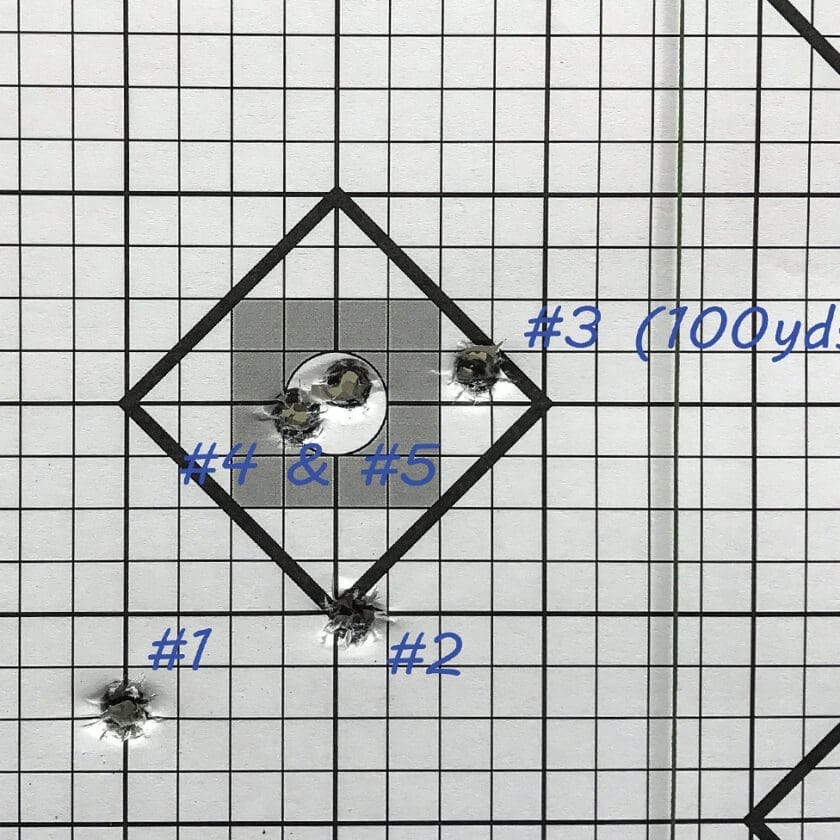
Overshooting makes people very anxious, because it moves their target well outside the comfort zone they’ve been living in. It’s unknown territory, full of lots of what-if’s. Not only does this make it doubly-beneficial by giving you far more new experience and also expanding your comfort zone, but worrying about not being able to adjust back to your natural comfort state is quite ridiculous.
This doesn’t only apply to skills. It applies to character as well. Many men believe they are virtuous simply because they have never been tested. But values, like any other system, require calibration and testing. A man who has never pushed against his own limits doesn’t actually know where they are. A man who has tested his boundaries is far more reliable than one who has simply assumed his virtue. Whether you believe in God or Darwin, reality has a funny way of pointing you to truth when you let it, so only those of weak faith are afraid of what they will find if they try.
And you just might find that the ideal calibration is actually way closer to your overshoot than you originally guessed. Most people never know because they never try and are still stuck inches away from their default behavior. What doesn't kill you makes you stronger. As long as you don't go so far you cause permanent damage, go for it. So yes, overcorrection can look and feel clumsy, but it’s the action of choice for decisive men.
Get Comfortable With “Bad”
Look, I’m glad you’re all nice, but I was too nice once also, and I need you to please stop. There’s no need to be so apologetic for your imperfect progress. Quite often, it’s self-consciousness that social pressure easily converts to hesitation disguised as humility. That will cause you problems. A little excess is not a crisis, it’s part of the process. Anyone who is going to be a king, general, or just a leader needs to be decisive rather than self-conscious, not just for his own sake but for those around him. Mistakes will get you called mean things, but when you’re doing the right thing, your fuck-ups are just steps on the path to greatness. And the criticism will never go away as long as anyone notices your success.

So stop searching for the flaw in everything. All of our people are each fucked up in their own ways. Some people are emotional or can't handle certain truths. Don't let their shortcomings stop you from doing what you are good at. I orbit a few guys I absolutely detest because they know things I don't, and I value that. The key is that I am aware of their flaws and am prepared to insulate myself from the problems they cause. Do you know how I learned to do that? By experience. Do you know how I got that experience? By overshooting. And boy did I get burned a few times. But the more painful it was, the faster I learned.
So unless you’re just low-ambition (why are you even here?), line up that rocket and let it take you to the stars. Or at least partway there. Because if you aim for the stars, you’ll probably at least land on the moon. Don't feel bad you didn't make it all the way, because most guys haven't even left the launch pad.
TLDR:
Overcorrection accelerates improvement
Directionally correct ideas and people are still useful because…
You can always correct course later.
Risk-taking is a skill that must be practiced
Get used to imperfection and the accompanying criticism